
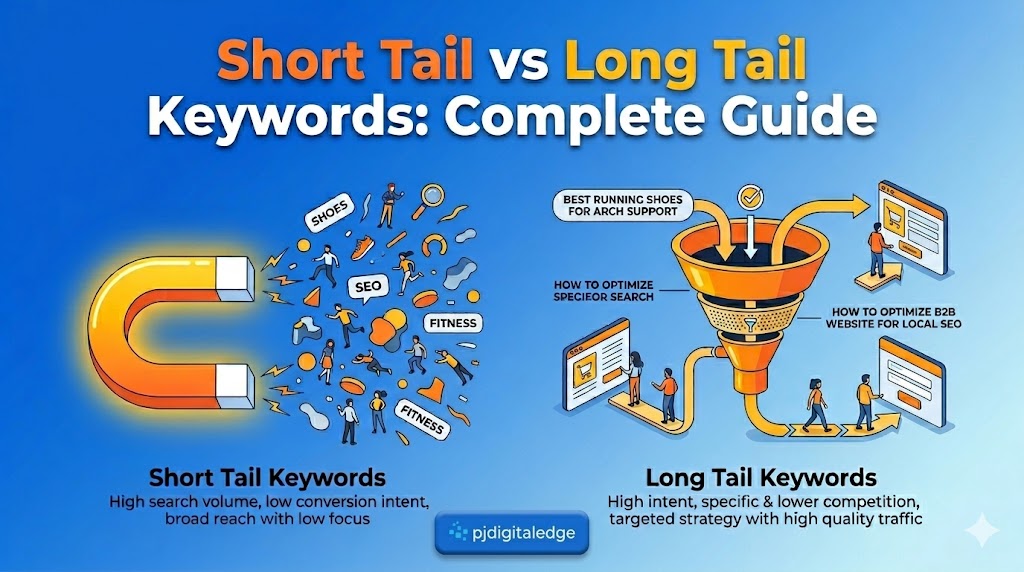
When it comes to SEO, understanding short-tail vs. long-tail keywords is one of the most important fundamentals. The type of keywords you target directly impacts your traffic, ranking difficulty, and conversion rate.
In this guide, you’ll learn the difference between short and long tail keywords, when to use each, and how to apply them effectively in your content strategy.
What Are Short Tail Keywords?
Short tail keywords are broad search terms, typically consisting of one to two words.
Examples:
- SEO
- Digital marketing
- Shoes
Key Characteristics:
- High search volume
- High competition
- Broad search intent
- Lower conversion rate
Short tail keywords attract a large audience, but they lack specificity. For example, someone searching for “shoes” could be looking to buy, browse, or just learn.
What Are Long Tail Keywords?
Long tail keywords are more specific search phrases, usually containing three or more words.
Long Tail Keywords Examples:
- best running shoes for beginners
- digital marketing strategy for small business
- how to improve SEO rankings fast
Key Characteristics:
- Lower search volume
- Lower competition
- Clear search intent
- Higher conversion rate
In long tail keywords SEO, the focus is on targeting users who know exactly what they want, making it easier to convert them into customers or readers.
Short Tail vs Long Tail Keywords: Key Differences
Understanding the difference between short and long tail keywords helps you build a balanced SEO strategy.
| Feature | Short Tail Keywords | Long Tail Keywords |
| Length | 1–2 words | 3+ words |
| Search Volume | High | Low to medium |
| Competition | Very high | Low to moderate |
| Intent | Broad | Specific |
| Conversion Rate | Low | High |
| Ranking Difficulty | Hard | Easier |
When Should You Use Short Tail Keywords?
Short tail keywords are useful when your goal is brand visibility and traffic growth.
Use them when:
- Building brand awareness
- Targeting a broad audience
- Creating pillar content pages
However, ranking for these keywords requires strong domain authority and high-quality backlinks.
When Should You Use Long Tail Keywords?
Long tail keywords are ideal for targeted traffic and conversions.
Use them when:
- Writing blog posts
- Targeting niche audiences
- Solving specific problems
- Building topical authority
For example, instead of targeting “SEO,” you can target “SEO tips for beginners in 2026.” This approach is more practical and easier to rank.
Why Long Tail Keywords Matter in SEO
In modern SEO, long tail keywords play a crucial role because search engines now focus heavily on user intent.
Benefits of Long Tail Keywords SEO:
- Easier rankings for new websites
- Higher engagement and lower bounce rates
- Better alignment with voice search queries
- Increased conversion potential
Most successful blogs generate a large portion of their traffic from long tail keywords rather than short ones.
How to Find Long Tail Keywords
Finding the right keywords doesn’t require expensive tools. You can start with simple methods:
1. Google Autocomplete
Type a keyword in Google and observe suggested searches.
2. “People Also Ask” Section
This reveals real user questions you can target.
3. Keyword Tools
Use tools like:
- Google Keyword Planner
- Ubersuggest
- Ahrefs
4. Competitor Analysis
Check what keywords your competitors are ranking for and identify gaps.
How to Use Both Keyword Types Together
A smart SEO strategy doesn’t choose one over the other. Instead, it combines both.
Practical Strategy:
- Use short tail keywords for main pages (homepage, category pages)
- Use long tail keywords for blog posts and articles
- Link long tail content to short tail pages
Example Structure:
- Main Page: “Digital Marketing”
- Blog Posts:
- “Digital marketing strategy for startups”
- “Best digital marketing tools for beginners”
This creates a strong content ecosystem and improves overall rankings.
Common Mistakes to Avoid
1. Targeting Only Short Tail Keywords
This makes it difficult to rank, especially for new websites.
2. Ignoring Search Intent
Even long tail keywords won’t perform if they don’t match user intent.
3. Keyword Stuffing
Overusing keywords harms readability and SEO performance.
4. Not Updating Content
Keyword trends change. Regular updates are necessary.
Final Thoughts
Understanding short tail vs long tail keywords is essential for building a successful SEO strategy. Short tail keywords bring visibility, while long tail keywords drive targeted traffic and conversions.
If you’re starting or growing a blog, focus more on long tail keywords first. As your authority increases, you can gradually compete for short-tail keywords.
The best results come from a balanced approach—using both strategically to capture traffic at every stage of the user journey.