
Search engine optimization can be confusing when you are just starting. You may have a website, blog, or online business, but your pages are not ranking on Google. This typically occurs because SEO is not conducted in a comprehensive and structured manner. This is where understanding the types of SEO becomes important.
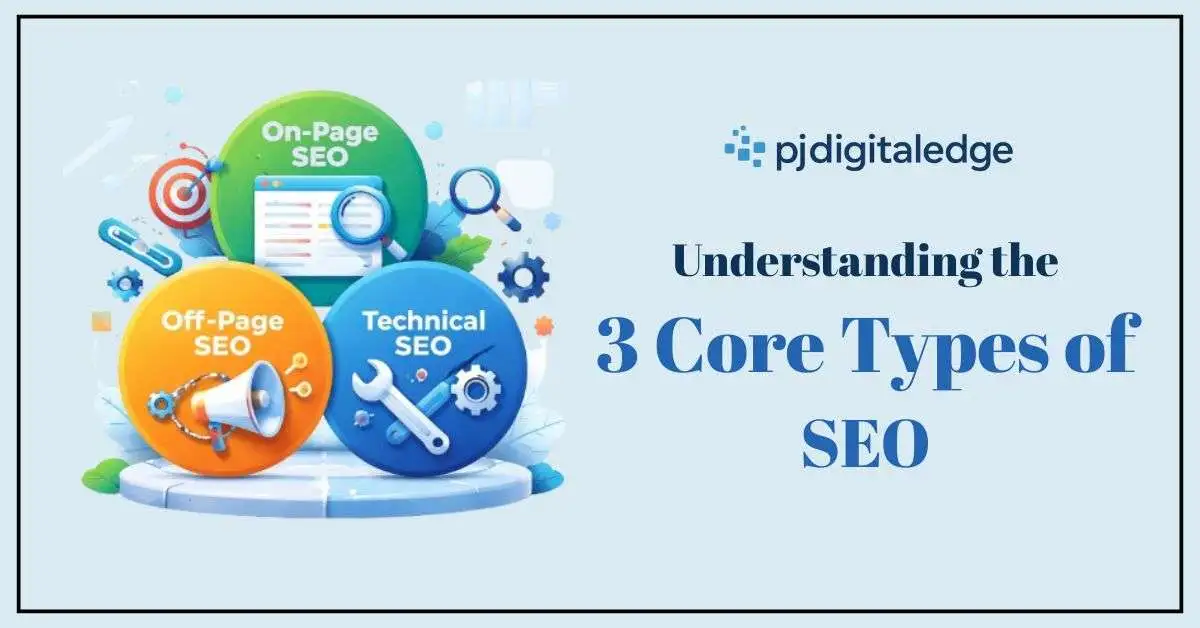
In this guide, you will learn the three main types of SEO explained with examples: on-page SEO, off-page SEO, and technical SEO. By the end, you will know how each type works, why it matters, and how to use them together for better rankings.
What Is SEO?
SEO stands for Search Engine Optimization. It is the process of improving your website so that search engines like Google can:
- Find your content
- Understand your content
- Trust your content
- Rank your content higher in search results
SEO is not about tricking Google. It is about creating helpful content and a technically sound website that users actually want to visit.
To do this properly, SEO is divided into three main parts.
Types of SEO Explained
There are three core types of SEO:
- On-Page SEO
- Off-Page SEO
- Technical SEO
Each type has a different role, but all three work together. If you ignore one, your overall SEO performance suffers.
Let us understand them one by one.
1. On-Page SEO
What Is On-Page SEO?
On-page SEO refers to all the optimization work done inside your website. This includes content, keywords, headings, images, and internal links.
It helps search engines understand what your page is about and helps users find answers easily.
How On-Page SEO Works (Step-by-Step)
- You research a keyword that people search for
- You create content that answers that search intent
- You optimize page elements, so Google understands it
Key Elements of On-Page SEO
- Title tags and meta descriptions
- Headings (H1, H2, H3)
- Keyword placement
- URL structure
- Internal linking
- Image optimization
- Content quality and readability
On-Page SEO Example
If your blog topic is Types of SEO, good on-page SEO would include:
- Using the keyword types of SEO in the title
- Adding related keywords like on-page seo, off-page seo, and technical seo naturally
- Writing clear headings and short paragraphs
- Linking to related posts like What Is SEO? or Keyword Research Guide.
2. Off-Page SEO
What Is Off-Page SEO?
Off-page SEO includes all activities done outside your website to improve its authority and trust.
Search engines use off-page signals to decide whether your website is reliable compared to others.
How Off-Page SEO Works
Google looks at signals such as:
- Who links to your website
- How often your brand is mentioned
- How users engage with your content across the web
These signals help Google measure credibility.
Key Elements of Off-Page SEO
- Backlinks from quality websites
- Brand mentions
- Social sharing (indirect impact)
- Guest blogging
- Online reviews
Off-Page SEO Example
If a respected marketing blog links to your article about SEO basics, Google sees this as a vote of confidence. One quality backlink can be more valuable than many low-quality links.
3. Technical SEO
What Is Technical SEO?
Technical SEO focuses on your website’s backend and infrastructure. It ensures that search engines can crawl, index, and rank your site properly.
Even great content may not rank if technical SEO is weak.
How Technical SEO Works
- Search engines crawl your website
- They index your pages
- They rank pages based on quality and performance
Technical SEO makes this process smooth and error-free.
Key Elements of Technical SEO
- Website speed
- Mobile-friendliness
- HTTPS security
- Clean URL structure
- XML sitemap
- Robots.txt file
- Fixing crawl and index issues
Technical SEO Example
If your website loads slowly or pages are not indexed in Google Search Console, rankings will drop. Improving speed and fixing indexing errors are technical SEO tasks.
On-Page vs Off-Page vs Technical SEO
Understanding the difference helps you prioritize better.
| SEO Type | Focus Area | Purpose |
| On-Page SEO | Content & page elements | Relevance |
| Off-Page SEO | External signals | Authority |
| Technical SEO | Website performance | Accessibility |
All three are equally important. SEO works best when it is balanced.
Why Types of SEO Are Important
Understanding the types of SEO helps you:
- Build a strong foundation
- Avoid focusing only on backlinks
- Improve rankings sustainably
- Create a better user experience
SEO is not one task. It is a system.
Common SEO Mistakes Beginners Make
- Focusing only on keywords
- Ignoring technical SEO issues
- Building low-quality backlinks
- Writing content without search intent
- Not using internal links
Avoiding these mistakes saves time and effort.
Best Practices for SEO Beginners
- Start with keyword research
- Write content for humans first
- Optimize one page at a time
- Use internal links strategically
- Track performance in Google Search Console
- Improve site speed and mobile usability
Consistency matters more than shortcuts.
FAQs: Types of SEO
Q1. What are the main types of SEO?
Ans: The main types are on-page SEO, off-page SEO, and technical SEO.
Q2. Which type of SEO is most important?
Ans: All three are important. Ignoring one weakens the others.
Q3. Can I do SEO without technical knowledge?
Ans: Yes, but basic technical SEO understanding helps long-term success.
Q4. Is on-page SEO enough to rank?
Ans: No. Without authority and technical health, rankings are limited.
Q5. How long does SEO take to show results?
Ans: Usually, 3 to 6 months with consistent effort.
Conclusion: How to Use Types of SEO Together
The types of SEO are not separate strategies. They are parts of one system.
- On-page SEO improves relevance
- Off-page SEO builds trust
- Technical SEO ensures accessibility
When combined, they help your website grow steadily and rank better over time.
Actionable Next Steps
- Audit one blog post for on-page SEO
- Check indexing and speed in Search Console
- Start earning quality backlinks slowly
To understand the foundation of SEO, read our earlier guide on how search engines work.